
All guides
Foodex Digital guide & playbook
From Brand Positioning to Customer Choice
A Practical Guide to Brand Positioning, Shopper Experience, and Physical & Digital Merchandising in the Food Industry
- Version
- 1.0
- Last updated
- Format
- Length
- 28 pages
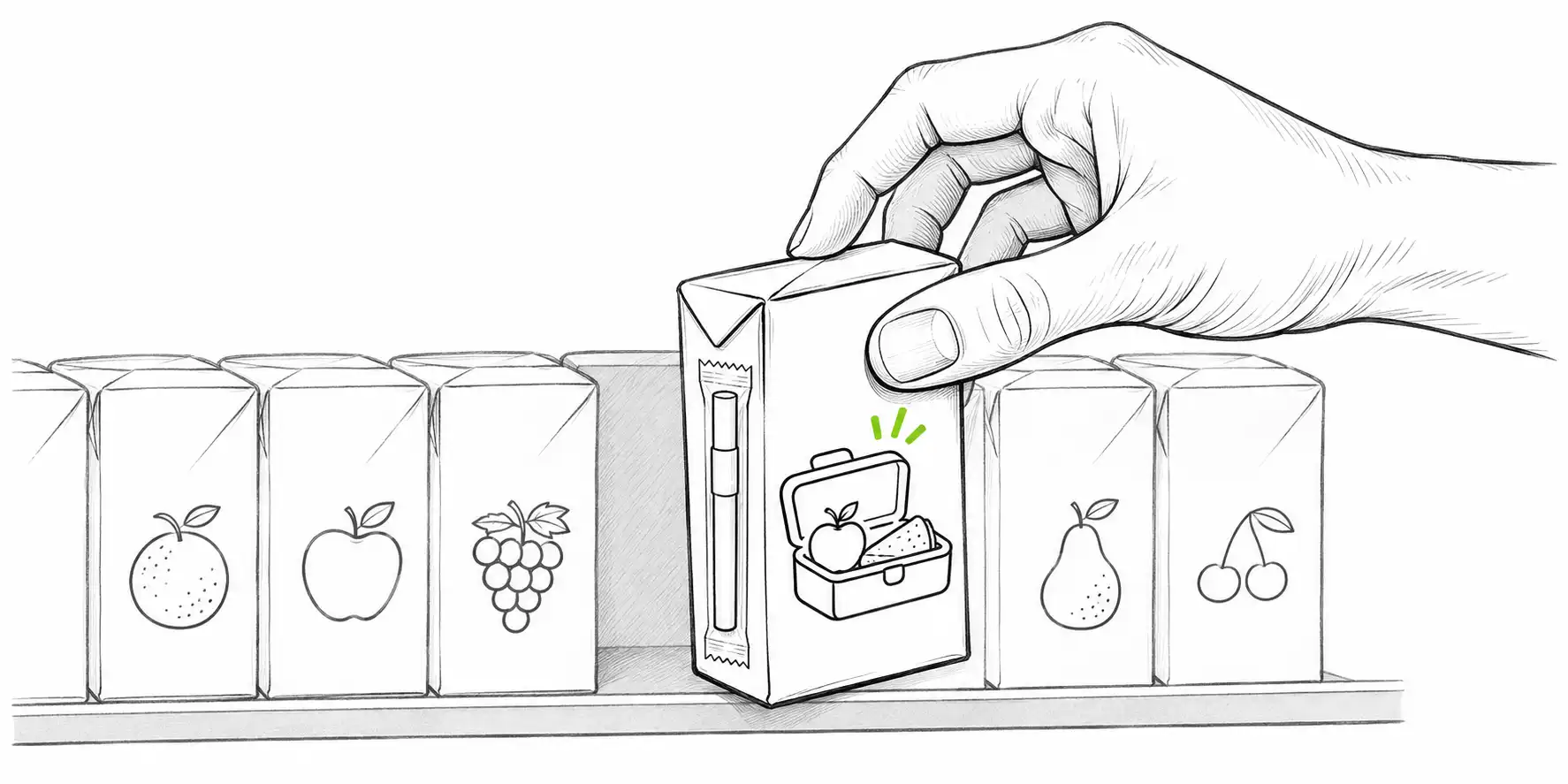
About this guide
Why Good Food Products Are Not Always Chosen
When a food product underperforms, the immediate response is often to redesign its packaging, strengthen its message, or increase promotional activity. Yet the real barrier may lie elsewhere: limited distribution, unclear differentiation, unsuitable pricing, weak product information, or friction in the shopping experience.
From Brand Positioning to Customer Choice provides a structured approach to understanding these challenges before selecting a solution.
The playbook begins with shopper needs, purchase occasions, and competitive alternatives. It then examines defensible differentiation, the translation of brand promises into packaging and customer touchpoints, and the execution of merchandising across physical and digital channels.
Finally, it introduces measurement frameworks, an integrated audit, and a 90-day action roadmap to help teams move from assumptions to better-informed decisions.
Rather than prescribing a universal formula, this guide helps food businesses identify relevant evidence, understand operational constraints, and prioritize actions that can be evaluated.
Who Is This Playbook For?
CEOs and founders of food and agribusiness companies
Brand and marketing managers
Commercial and business development leaders
Sales and channel management teams
Product and portfolio managers
E-commerce and digital commerce teams
Packaging and brand development professionals
Food industry consultants and advisors
When Should You Use This Playbook?
When your product is visible but not consistently chosen.
Investigate whether the issue involves shopper preference, differentiation, perceived value, or the conditions of purchase.
When reviewing your brand positioning.
Assess whether the intended position reflects meaningful shopper needs and can be supported by credible evidence.
When redesigning packaging or restructuring a product portfolio.
Ensure the proposed changes address a real decision-making challenge.
When performance differs across retail channels.
Examine product discoverability, placement, information accuracy, assortment, and shopping conditions.
When several improvement opportunities compete for resources.
Prioritize actions and design a manageable, measurable pilot.
What You Will Learn
1- Diagnose Before Repositioning
Separate positioning challenges from issues involving distribution, price, product fit, and the shopping experience.
2- Build Defensible Differentiation
Identify shopper needs, purchase occasions, relevant alternatives, and meaningful sources of value.
3- Translate Positioning Into Shopper Experience
Examine how brand promises are communicated through packaging, product information, and customer touchpoints.
4- Improve Physical and Digital Merchandising
Review retail shelf conditions, product placement, SKU assortment, point-of-sale execution, and digital shelves.
5- Measure and Validate
Distinguish visibility, stated preference, selection signals, and recorded purchases. Design more reliable comparisons.
6- Turn Findings Into Action
Use an integrated audit to prioritize issues, select a pilot, and develop a 90-day execution roadmap.
Practical Tools Included
Problem diagnosis and evidence log
Shopper choice criteria framework
Customer alternatives map
Defensible differentiation assessment
Brand promise evaluation worksheet
Retail shelf audit
Digital shelf audit
SKU assortment decision framework
Measurement and experiment planning tools
Positioning-to-Purchase Audit
Pilot prioritization worksheet
90-day execution roadmap
Expected Outcomes
After using this playbook, teams should be better equipped to:
Turn product underperformance into testable hypotheses.
Compare intended brand positioning with actual shopper perceptions and experiences.
Evaluate potential points of differentiation through shopper value, supporting evidence, and business capabilities.
Audit product availability and presentation across physical and digital channels.
Select metrics that answer specific management questions.
Define a prioritized improvement initiative with a clear owner, measurement approach, and decision criteria.
Frequently Asked Questions
What is the difference between brand positioning and visual identity?
Brand positioning defines how a brand intends to be understood by a specific audience, in a particular purchase context, and relative to relevant alternatives. Visual identity is one way to communicate that positioning, not a substitute for the underlying strategy.
Should a food brand change its positioning when sales decline?
Not necessarily. Lower sales may reflect distribution constraints, pricing, availability, product-market fit, or shopping friction. The likely causes should be investigated before changing the brand's intended position.
How does merchandising support brand positioning?
Merchandising influences how products are presented, found, compared, and accessed in sales channels. It can help reinforce brand positioning at the point of choice, but merchandising alone does not determine the brand's strategic position.
Should product presentation be identical across physical and digital channels?
Core SKU information should remain accurate and consistent. However, pricing, stock availability, promotional activity, and purchase conditions may legitimately differ between channels.
How can teams evaluate whether a marketing change worked?
Define the proposed change, primary metric, eligible population, and comparison approach before implementation. An improvement observed after the change does not, by itself, establish causation.
Can this framework be applied to every food category?
Its diagnostic and decision-making principles can be adapted to many categories. However, shopper behavior, packaging requirements, merchandising practices, and distribution conditions vary by product and market.