
All guides
Foodex Digital guide & playbook
Food Brand Content System Guide
A practical guide to organizing product information, building a coherent content system, and creating connected experiences across food-brand touchpoints, with consideration for AI-assisted operations and content governance.
- Version
- 1.0
- Last updated
- Format
- Length
- 18 pages
About this guide
Producing more content does not necessarily lead to stronger customer relationships or better brand performance. Food and beverage businesses often publish information across websites, social media, online marketplaces, sales catalogs, and other communication channels. Yet these activities are not always supported by a shared information foundation or a coordinated content architecture. As a result, the same product may be described differently across touchpoints, important brand messages may become unclear, and customers may find it difficult to understand or select the right product.
In such situations, the underlying problem is not necessarily a lack of content. Weak performance may stem from inconsistent product information, unclear message priorities, fragmented channel management, or the absence of a defined process for creating, reviewing, and updating content. Before increasing production, businesses need to identify which parts of their content system are underperforming and examine the evidence behind those findings.
This Foodex Digital playbook introduces a problem-led approach to designing and implementing a coherent content system for food brands. It begins with diagnosing content weaknesses and auditing existing assets, then explores authoritative product information, version control, claims verification, and audience information needs. The objective is to establish a reliable foundation that different teams can use to communicate consistently.
From Reliable Information to Coherent Content Architecture
An effective content system is more than a collection of copy, images, templates, and publishing schedules. It should clarify which information is authoritative, which messages deserve priority, what different audiences need to know, and how content should be prepared for specific touchpoints.
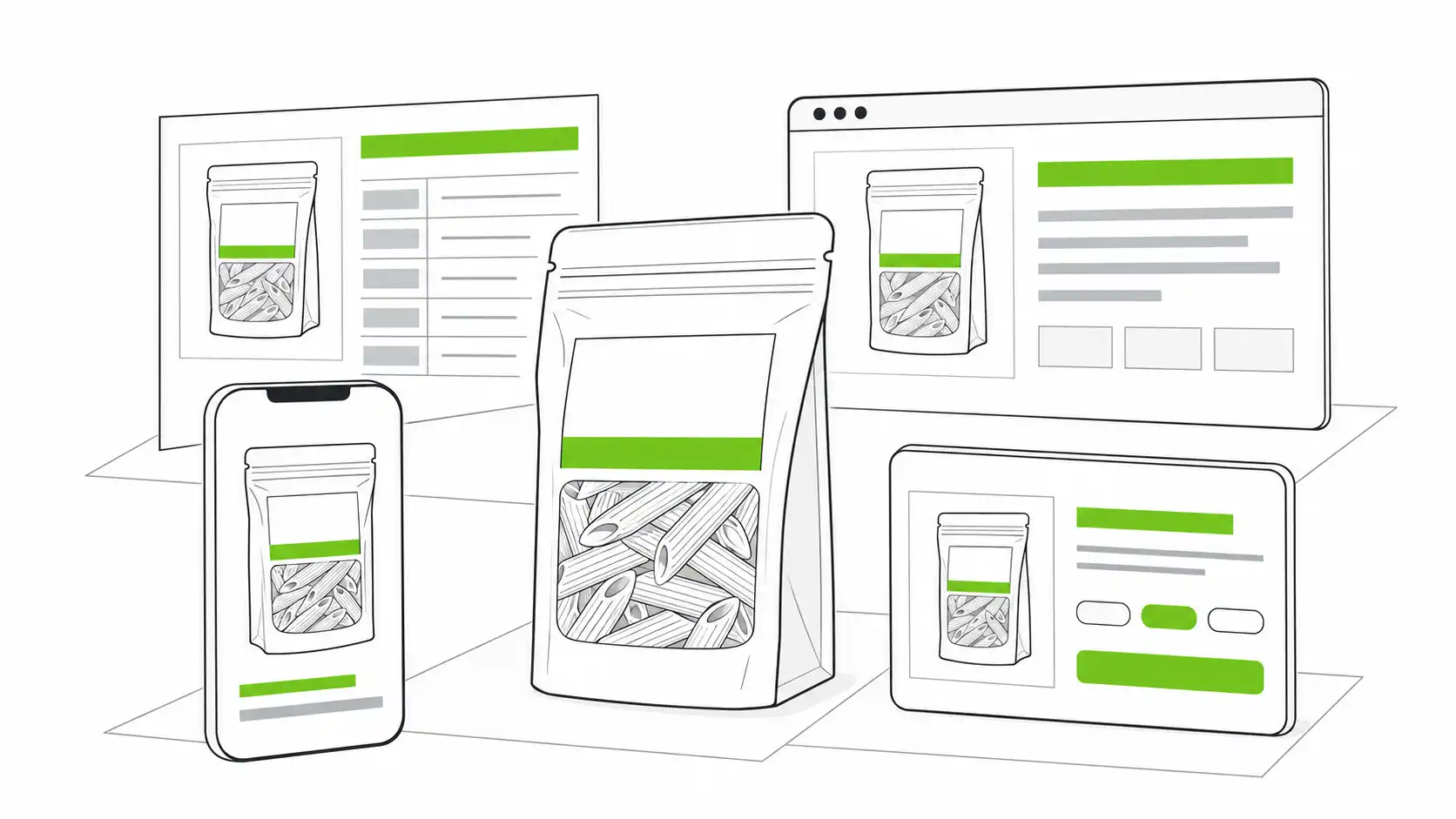
The guide examines message architecture, modular content, and channel-specific communication. A consumer evaluating a packaged product in an online store may need different information from an industrial buyer reviewing a technical sales catalog. Nevertheless, verified product specifications, core identity, and the accuracy of claims must remain consistent.
Content consistency does not mean publishing identical messages everywhere. It means maintaining a reliable information foundation while adapting communication to the audience, channel, and decision context.
Creating Continuity Across Customer Touchpoints
Customers may first encounter a product on social media, examine its specifications on the official website, and later contact sales or customer support for further information. When these touchpoints provide conflicting details or fail to offer a clear next step, the customer experience becomes fragmented.
This playbook explains how channel roles can be defined around audience needs and connected through reliable product information and coherent messaging. The approach can be adapted to consumer food brands, ingredient manufacturers, and businesses operating across B2B and B2C markets.
The Role of Artificial Intelligence in Food Brand Content Systems
Artificial intelligence can assist content teams with organizing information, preparing drafts, comparing content versions, and identifying potential inconsistencies. However, AI-generated outputs are not automatically accurate or approved for publication. Authoritative sources, appropriate human review, protection of sensitive information, and clear publication responsibilities remain essential.
The guide also considers how structured, accessible, and reliable brand information may support digital discoverability as search and AI-assisted information environments evolve. It distinguishes between making information easier to access and interpret, and guaranteeing visibility or citation in third-party search or AI-generated responses.
From System Design to Implementation and Measurement
The operational chapters address implementation scope, organizational responsibilities, content assets, and limited pilot activities. They introduce practical ways to examine information consistency, content traceability, audience understanding, and continuity across selected touchpoints.
The playbook concludes with an adaptable 90-day action plan that helps teams establish a baseline, organize a controlled pilot, review available evidence, and decide whether to retain, improve, or expand the system. The timeline provides planning checkpoints rather than fixed deadlines or guaranteed outcomes.
Who Is This Guide For?
This guide is intended for food and beverage brand leaders, marketing managers, content teams, product managers, and business decision-makers seeking a more structured approach to content operations.
Its purpose is to help organizations move from fragmented publishing activities toward a coordinated, manageable, and measurable content system—one that prioritizes reliable information, clear responsibilities, and meaningful customer experiences over content volume alone.